Poppy: Building a Proactive AI Assistant
(iOS, macOS, watchOS) Founding iOS Engineer at Second Nature Computing, taking Poppy from pre-launch through its public debut.
I'm the Founding iOS Engineer at Second Nature Computing (April 2026 – present), where three of us build Poppy, a proactive AI assistant for iOS. I joined about a month before launch; Poppy debuted publicly in May 2026 and was covered by TechCrunch and 9to5Mac.
What Poppy is
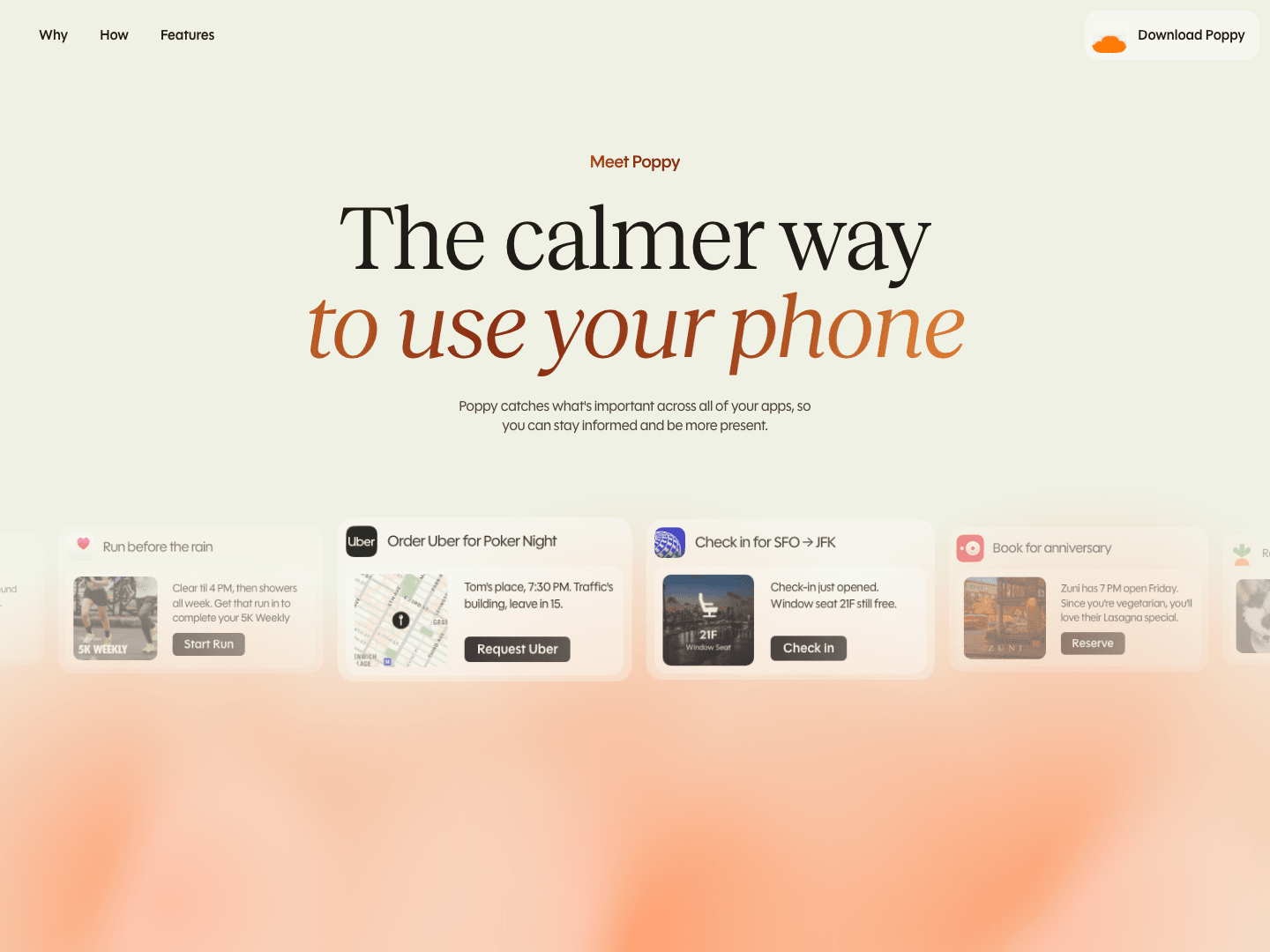
Most assistants wait to be asked. Poppy connects the accounts you already live in, then figures out what matters right now, before you ask. If you have a 30-minute gap in your calendar and you're near a park, it suggests a walk. When you're picking a brunch spot, it remembers the food preferences a friend mentioned over text. It tracks flights, reminds you about medication, and folds everything into one feed instead of twelve apps.
At launch, Poppy integrates with Apple and Google Calendar, Gmail, Outlook, iCloud Mail, Apple Health, Reminders, Contacts, iMessage, and WhatsApp, plus actions through apps like Uber and Instacart. An assistant is only as useful as the context it can see. That context is also a lot of personal data to be trusted with: everything is encrypted at rest, and cloud LLM calls run under a zero-retention policy.
Second Nature is backed by $1.25M in pre-seed funding led by Kindred Ventures, with angels including DeepMind's Logan Kilpatrick. The founder, Sai Kambampati, came from Humane and approaches the problem from ambient computing: software that acts on your behalf instead of waiting for a prompt.
What I've built
- Pods. Co-built Poppy's long-running agentic tasks, which handle a goal over days or weeks, not a single prompt. I own the pods backend day to day and the client that renders agent output (charts, chips, deep links) as native SwiftUI.
- The Apple ecosystem. I own Poppy's Apple-platform surface end to end (iOS, watchOS, macOS), including Mac Handoff: a suggestion surfaces on iPhone or Watch minutes before a meeting, and one tap opens the link on the Mac over MultipeerConnectivity, with the Watch path relayed through the phone via WatchConnectivity.
- Reminders. Two-way sync between Poppy's reminder system and Apple Reminders, with our backend as the source of truth: silent no-alarm reminders mirror Poppy's reminders on Apple's side, edits and deletions made offline on either side reconcile on re-sync, and ownership logic decides which system fires the alarm, so it only ever fires once.
- Health context. The health layer integrating HealthKit and Oura Ring data: logic that decides which source wins when Apple Watch and ring disagree, and sleep briefings that explain scores with the life context behind them.
- The redesign. A ground-up UI pass adopting Liquid Glass across iOS 26 and 27.
- Measurement. Product analytics from zero: Mixpanel, in-depth dashboards, weekly reports. The first big payoff was the new onboarding flow, converting ~60% end to end through OTP verification and a paywall.
The onboarding animation sequence, built in SwiftUI.
Why this problem
Proactive assistance is the part of the assistant dream that chat interfaces skipped. Getting it right means fusing noisy signals from a dozen sources, deciding when a suggestion is helpful versus creepy, and doing both under privacy constraints that rule out the lazy solutions. As the founding engineer, I own the architecture, the pace we ship at, and the quality bar a consumer audience expects.
Tech stack
Swift, SwiftUI, iOS, macOS, watchOS, large language models, Mixpanel, REST/streaming APIs.